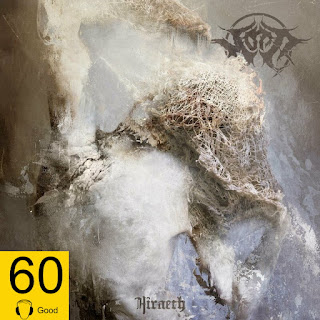
D$ Luqi - UOTOTOGOKA (2026)

With UOTOTOGOKA, D$ Luqi attempts to create an uncompromising portrait of political anger, personal contradictions and emotional vulnerability through an unpredictable mixture of experimental hip-hop, fragmented jazz samples and abrasive vocal performances.
It's an ambitious undertaking, but one I find considerably more interesting conceptually than musically. The album addresses racism, colonial history, masculinity, guilt and the difficulties of confronting one's own shortcomings. Unfortunately, the production frequently feels chaotic rather than inventive, while the aggressive delivery and abrupt stylistic changes make the overall experience exhausting.
The opening "na minha vez o Pelé é branco" immediately establishes the confrontational atmosphere. Its provocative title introduces questions about Brazilian racial identity and representation, while the experimental production reinforces the sense of tension. I appreciate the ambition, but the fragmented rhythmic approach doesn't provide a particularly enjoyable foundation.
"teoria da bondade inata" continues with philosophical reflections on human nature and morality. The ideas are interesting, but the musical execution remains rather difficult. I often find the writing more engaging than the underlying beat.
"a visão de Patrice Lumumba" is one of the album's stronger conceptual moments, connecting contemporary racial questions with the history of colonialism and African independence. I appreciate the historical reference, although the composition doesn't develop a sufficiently memorable musical identity.
"síndrome do pequeno poder" examines the abuse of authority within ordinary social relationships. Its subject provides a worthwhile extension of the political themes, but the persistent aggression begins to make the opening sequence monotonous.
The interlude "é melhor se arrepender de ter feito do que se arrepender de não ter tentado" introduces a more personal perspective, although its theatrical treatment contributes relatively little independent musical value.
"entre o sério e o banal (freestyle)" brings some stylistic variation, but the sampling and abrupt change in direction feel disconnected from the surrounding compositions. The novelty is more apparent than the songwriting.
"a equipe" is my favourite track on the album.
What makes it stand out is its more immediate, funk-influenced rhythmic approach. After several compositions dominated by abrasive production, fragmented structures and confrontational performances, its comparatively direct energy provides a welcome change.
I particularly appreciate the emphasis on groove. The rhythmic foundation gives the music a physical character that is often missing elsewhere on the record, allowing the performance to become more engaging without depending exclusively on aggression.
The lighter atmosphere is another advantage. Much of UOTOTOGOKA seems determined to confront the listener with political anger or psychological discomfort. Here, the music feels less burdened by the need to communicate something profound at every moment.
That relative simplicity is refreshing.
I also appreciate the connection with Brazilian funk, which gives the composition a more immediate regional identity rather than relying predominantly on experimental hip-hop conventions associated with American underground rap.
The track isn't especially sophisticated, and I wouldn't consider it an exceptional composition. However, its rhythmic accessibility, comparatively playful character and more coherent musical construction make it the moment I most enjoy revisiting.
It demonstrates that D$ Luqi can be engaging without constantly resorting to abrasive textures or deliberately difficult structures.
"a dualidade do ser humano" marks the transition towards a more introspective second half. The examination of personal contradiction is appealing, particularly because the album begins to question the narrator's own behaviour rather than concentrating exclusively on external injustice.
However, the production remains unstable, and the musical ideas don't always support the psychological ambition.
"eu vou ser o único que você chama de amor" explores a more possessive and uncomfortable understanding of romantic attachment. The subject adds complexity to the record's portrait of masculinity, although the execution remains overly confrontational.
"como causar dano irreversível a quem te ama" is one of the album's most ambitious compositions, featuring multiple performers and shifting instrumental sections. I appreciate the attempt to examine destructive relationships through different perspectives, but the arrangement becomes unnecessarily chaotic. The competing ideas rarely develop into a convincing musical progression.
"o cúmulo da neurose" continues the psychological themes, but I find the combination of aggressive delivery and limited instrumental variation increasingly tiring.
"eu liguei pra minha mãe" is one of the better lyrical moments. Its focus on familial vulnerability and the difficulty of admitting personal struggles provides a welcome contrast with the exaggerated confrontation elsewhere. I appreciate the narrative sincerity, even if the musical arrangement isn't particularly distinctive.
"Ho'oponopono" introduces ideas of reconciliation and emotional recovery, but the familiar sampled material feels somewhat obvious within an otherwise deliberately experimental record.
Finally, "o filho do mundo, Uototogoka" attempts to bring the album's themes together through another examination of identity and emotional instability. I appreciate the conceptual ambition, but the fragmented production and overwhelming performance make the conclusion more exhausting than cathartic.
My principal reservation concerns the lack of musical coherence. Experimental hip-hop doesn't need conventional arrangements, but the different sounds and rhythmic structures should still contribute to a convincing musical identity.
Here, the frequent transitions between jazz samples, abrasive passages, funk influences and more conventional rap arrangements rarely feel entirely integrated.
I also find the vocal performances inconsistent. D$ Luqi demonstrates conviction and considerable energy, but the constant aggression often becomes monotonous.
The lyrics are more interesting, particularly when the record connects social criticism with personal responsibility. Nevertheless, the writing occasionally favours philosophical declarations and provocation over detailed storytelling.
The album's emotional range is another limitation. Anger, guilt and psychological distress dominate much of the sequence, leaving relatively little space for humour, reflection or musical pleasure.
This is precisely why I appreciate "a equipe". Its more direct rhythmic approach introduces a sense of enjoyment that the surrounding material frequently lacks.
The production would benefit from greater discipline. I would have preferred fewer abrupt stylistic changes, stronger rhythmic foundations and more attention to memorable instrumental ideas.
There is clearly an interesting artistic personality behind the project, and I appreciate the willingness to explore difficult subjects from a distinctly Brazilian perspective.
However, I find myself respecting the intentions more than enjoying the results.
Ultimately, UOTOTOGOKA is a disappointing but occasionally interesting experimental hip-hop album. Its political consciousness and personal vulnerability provide a substantial conceptual foundation, but the chaotic production, inconsistent songwriting and excessive confrontational energy make the complete record difficult to appreciate.
57/100
Playing time: 00:41:57
❤️ Favourite track: "a equipe"
+ Ambitious exploration of racial identity, masculinity, social inequality and personal responsibility
+ Enjoyable Brazilian funk-influenced groove and more accessible rhythmic energy on "a equipe"
+ Occasional interesting storytelling and a willingness to experiment beyond conventional hip-hop structures
– Chaotic production and abrupt stylistic changes that undermine musical coherence
– Overly aggressive vocal performances and limited emotional contrast
– Relatively weak songwriting, with too few memorable beats or convincing instrumental developments
Genre: Experimental Hip Hop
Country: Brazil
Final Verdict: 57% (Forgettable Album)
Yearly Ranking: 772th / 814
Highlight: a equipe
Made me think of:
JPEGMAFIA
Danny Brown
billy woods
#newalbum #newalbum2026 #albumrelease #newmusic #albumoftheday #nowspinning #NowPlaying #musicdiscovery
#ExperimentalHipHop #D$Luqi #Brazil
#LP #Album #release