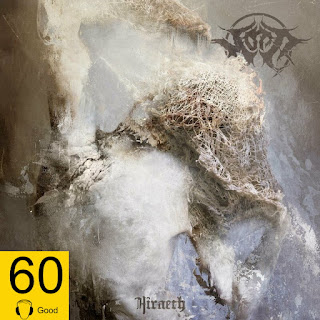
Kali Malone - Burning Song (2026)

With Burning Song, Kali Malone returns to the pipe organ for another exploration of sustained harmonies, instrumental resonance and the relationship between musical structure and physical space. Accompanied by Lucy Railton on cello and Stephen O'Malley on bowed acoustic guitar, she presents seven compositions that move between contemporary classical minimalism, drone and atmospheric chamber music.
It's a musical approach I generally appreciate, particularly because I enjoy experimental compositions that create immersive environments through subtle harmonic changes and carefully controlled instrumental textures. However, I find Burning Song rather disappointing. The arrangements are frequently elegant, and there are occasional moments of genuine beauty, but the music remains so restrained that several compositions struggle to establish a distinctive identity.
The album represents an interesting development in Malone's compositional approach. Rather than relying exclusively on the systematic harmonic processes associated with much of her earlier work, she introduces more intuitive melodic structures and a greater sense of emotional progression.
Nevertheless, I find the difference more significant conceptually than musically. The melodies remain understated, the harmonic development is extremely gradual, and the restricted instrumental vocabulary makes the complete album feel rather uniform.
What interests me most is the interaction between the three instruments. The organ provides a sustained harmonic foundation, while the cello and bowed guitar introduce more organic textures capable of blending with its enormous resonance.
This combination is particularly appealing because the boundaries between the instruments can become ambiguous. The bowed strings sometimes suggest electronic drones, while the organ produces tones that seem almost detached from their physical source.
However, the fascination of these instrumental relationships doesn't always translate into compelling compositions.
"Grieving Figure" opens the album with an appropriately sombre atmosphere. The gradual accumulation of sustained tones establishes an austere musical environment, allowing subtle changes in harmonic density to become the principal source of development.
I appreciate the sense of restraint, particularly because the arrangement avoids unnecessary dramatic gestures.
However, the composition also establishes one of my main reservations. The harmonic progression is extremely slow, and the music doesn't introduce enough distinctive melodic material to maintain my interest consistently.
The atmosphere is convincing, but the musical development feels relatively limited. I appreciate the opening's sombre character without finding it especially memorable.
"Map the Path" introduces a somewhat clearer sense of movement.
I particularly appreciate the more recognisable melodic direction, which gives the composition a stronger identity than the opening track.
The gradual changes in harmony suggest a progression through different emotional states, while the interaction between organ and bowed instruments creates an appealing sense of depth.
However, the arrangement remains excessively restrained. The melodic ideas are interesting but not especially memorable, and the transitions between different harmonic environments feel predictable.
The composition is pleasant, although I would have appreciated more substantial variation in texture or intensity.
"Bells On A Branch" is one of the album's more intriguing experiments in instrumental timbre.
The interaction between organ, cello and bowed guitar becomes particularly important, creating sustained textures in which the different instruments sometimes become difficult to distinguish.
I appreciate this sense of ambiguity. Stephen O'Malley's background in drone music makes his contribution particularly appropriate, and the combination of acoustic instruments creates a sound that occasionally resembles electronic processing.
Nevertheless, I find the composition more interesting as an exploration of texture than as a complete musical statement.
The sustained tones develop gradually, but relatively little happens melodically. The arrangement is sophisticated, yet the emotional impact remains limited.
I would have appreciated a more pronounced contrast between the denser passages and the quieter sections.
"Crawling Ashore" offers another restrained exploration of melancholy and gradual harmonic transformation.
The cello introduces a darker, more intimate character, while the organ maintains the composition's expansive atmosphere.
I appreciate the relationship between these instruments, particularly because the contrast between the cello's expressive qualities and the organ's sustained tones creates an interesting emotional tension.
However, the music remains extremely static.
The gradual changes in harmony are attractive, but they don't establish a sufficiently compelling sense of progression.
I occasionally feel that Malone expects the listener to discover emotional significance in details that are too subtle to sustain my attention.
The composition is beautiful in places, but also rather monotonous.
"Sounding A Void" returns to an even more austere atmosphere.
The title suggests an attempt to give musical form to absence, and the restrained instrumentation is appropriate to that concept.
I appreciate the attention to resonance and the relationship between sound and silence. The organ is particularly effective at creating an impression of physical space, while the sustained notes allow subtle changes in timbre to become more noticeable.
However, this is one of the compositions I find least engaging.
The melodic material is minimal, the harmonic development is extremely limited, and the atmosphere feels too similar to several preceding tracks.
By this point, the album's restricted musical vocabulary has become frustrating.
I appreciate minimalism when repetition creates tension or gradually transforms my perception of the music. Here, the sustained tones occasionally seem to remain in place without producing a sufficiently interesting development.
"Heavy With Fruit" introduces a somewhat warmer harmonic character.
I appreciate the richer instrumental textures, particularly when the cello and bowed guitar interact with the organ's sustained harmonies.
The composition offers a more accessible emotional atmosphere than some of the darker preceding pieces.
However, the musical structure remains relatively predictable.
The gradual harmonic changes are elegant, but they don't introduce much that feels genuinely new within the album.
The melody remains understated, while the overall atmosphere is very close to the preceding compositions.
I find the piece pleasant but not especially rewarding. It demonstrates Malone's sensitivity to instrumental colour without establishing a memorable musical identity.
"My Eve My Dawn" is my favourite track on the album.
As the closing composition, it offers the most convincing relationship between the record's austere musical language and its emotional intentions.
I particularly appreciate the suggestion of transformation implied by the title. Evening and dawn represent different moments within a continuous passage of time, creating an appealing metaphor for the relationship between endings and new beginnings.
The composition's gradual harmonic development fits naturally with that idea.
Rather than introducing a dramatic resolution, the arrangement moves through subtle changes in atmosphere, allowing the sustained tones to suggest a gradual transformation of the emotional landscape.
I appreciate this more reflective approach because it gives the music a sense of direction without sacrificing its minimalist identity.
The interaction between organ and bowed instruments is also particularly appealing. Their sustained textures create continuity, while the harmonic movement introduces a stronger emotional progression than on several of the preceding compositions.
Nevertheless, even here, I find the melody relatively weak.
The composition is atmospheric and conceptually coherent, but it doesn't entirely achieve the emotional impact I would expect from a memorable closing statement.
It's my favourite largely because the relationship between atmosphere and musical development feels more convincing than elsewhere on the record.
My principal reservation concerns the limited musical variety.
The combination of organ, cello and bowed guitar is interesting, but the album remains committed to a very narrow range of textures, tempos and harmonic gestures.
I appreciate consistency in minimalist music, but there is a difference between creating a coherent atmosphere and repeating essentially the same musical approach across several compositions.
Here, the boundaries between the tracks frequently become blurred.
The harmonic progressions are subtle, the melodies restrained, and the overall emotional character consistently solemn.
This makes the album more difficult to appreciate as a collection of individual compositions.
The lack of memorable melodic material is another significant limitation.
Malone's more intuitive approach is supposed to introduce greater emotional directness, but I still find the melodies relatively elusive.
The music creates an atmosphere while it plays, yet relatively few individual themes remain in my memory afterwards.
I generally prefer contemporary classical music that combines atmospheric sophistication with a stronger sense of melodic identity.
Here, the textures are more memorable than the actual compositions.
The pacing is equally problematic.
I don't expect minimalist organ music to introduce conventional rhythms or dramatic changes every few seconds. However, the gradual transformations need to create a convincing sense of movement.
On Burning Song, several compositions seem to develop so slowly that their progression becomes almost imperceptible.
The music occasionally feels suspended rather than genuinely evolving.
This can be effective when the atmosphere is sufficiently compelling, but I don't find that consistently the case here.
The emotional range is another limitation.
The album concentrates heavily on grief, reflection and the possibility of renewal, creating a serious and introspective atmosphere.
I appreciate melancholy, particularly when it is communicated through subtle instrumentation.
However, the almost complete absence of brighter or more energetic passages makes the record rather monotonous.
Greater contrast could have made the quieter moments more affecting.
The production is considerably more successful.
Recording in Leipzig's Thomaskirche gives the organ an impressive sense of physical space, while the instrumental arrangements allow the individual textures to interact naturally.
I particularly appreciate the relationship between the organ's monumental resonance and the comparatively intimate character of the bowed strings.
The historical tuning principles associated with the instrument also provide an interesting connection between contemporary composition and older European musical traditions.
Nevertheless, these qualities relate more to sonic presentation than to the strength of the songwriting.
The involvement of Lucy Railton and Stephen O'Malley is another appealing aspect.
Their contributions introduce different instrumental personalities, and the blending of their sustained tones with the organ creates several unusual textures.
However, I would have appreciated a more adventurous exploration of those possibilities.
The cello and bowed guitar frequently reinforce the existing atmosphere rather than challenging or transforming it.
As a result, the instrumental combination feels more conservative than the musicians' backgrounds might suggest.
The album's relatively short duration is an advantage.
At approximately forty minutes, it avoids the monumental lengths of some earlier Malone recordings, making the music more accessible in principle.
However, the seven compositions still feel rather repetitive because their musical vocabulary remains so consistent.
A shorter record doesn't necessarily become more engaging when the individual tracks lack sufficient distinction.
There are nevertheless some worthwhile qualities.
The attention to resonance is impressive, and the interaction between organ and bowed strings occasionally creates beautiful, almost otherworldly textures.
I also appreciate the willingness to approach contemporary classical music through restraint rather than technical virtuosity.
The more melodic direction is promising, particularly on "Map the Path" and "My Eve My Dawn", where the harmonic development suggests a clearer emotional trajectory.
However, I don't find these moments sufficiently substantial to transform my overall impression.
Too much of the record depends on subtle variations within a familiar atmosphere, and the music rarely surprises me.
Ultimately, Burning Song is a decent but rather underwhelming contemporary classical album.
Its carefully constructed textures, impressive acoustic resonance and occasional moments of melancholy are appealing, but the restrained melodies, slow harmonic development and limited emotional variety make the complete experience less rewarding than its artistic ambitions suggest.
I particularly appreciate "My Eve My Dawn", "Map the Path" and parts of "Bells On A Branch", where the interplay between the instruments creates a more distinctive atmosphere.
However, the compositions frequently feel too similar, and the minimalist approach occasionally becomes an exercise in patience rather than a source of genuine emotional immersion.
Kali Malone remains an interesting composer, but I would have appreciated more substantial melodic writing, greater instrumental contrast and a stronger sense of progression.
There is beauty here, although I find it more in the textures than in the compositions themselves.
63/100
Playing time: 00:39:59
❤️ Favourite track: "My Eve My Dawn"
+ Beautiful acoustic resonance and unusual interaction between organ, cello and bowed guitar
+ Occasional appealing harmonic developments, particularly on "My Eve My Dawn" and "Map the Path"
+ Coherent minimalist aesthetic with subtle melancholy and carefully constructed instrumental textures
– Excessively restrained melodies and limited harmonic development that make several compositions feel static
– Very little rhythmic, instrumental or emotional contrast, resulting in a relatively monotonous listening experience
– Greater emphasis on atmospheric sophistication and sonic texture than memorable or emotionally compelling compositions
Genre: Drone
Country: US/Sweden
Final Verdict: 63% (Good Album)
Yearly Ranking: 536th / 815
Highlight: My Eve My Dawn
Made me think of:
Sarah Davachi
Éliane Radigue
Anna von Hausswolff
#newalbum #newalbum2026 #albumrelease #newmusic #albumoftheday #nowspinning #NowPlaying #musicdiscovery
#Drone #KaliMalone #US/Sweden
#LP #Album #release